
The short answer
At a small hotel or guesthouse, night calls are mostly about room availability, late arrival, parking and breakfast hours. An AI voice agent can answer these from an approved knowledge base and record booking requests, while safety matters and urgent guest problems should always reach a person on duty.
Who calls a hotel at night
Night calls usually come from guests on the road announcing a late arrival, people in other time zones asking about availability, and guests already checked in. Each group needs something different, so the script should tell them apart within the first questions.
What the agent can handle on its own
From a hotel-approved knowledge base the agent can give the address, parking details, breakfast hours, check-in and check-out rules, and self check-in instructions if the hotel uses them. It can also record a booking request with dates, guest count and contact details for reception to confirm in the morning. Without a connected booking system it should not confirm availability or price.
Apply the workflow to your industry
AI receptionist for hotelsWhat the agent should not do
The agent does not handle safety, health or in-room emergency reports — it passes them immediately to the person on duty or gives the emergency number. It does not negotiate prices, promise refunds or change bookings without staff confirmation. Clear limits protect both guests and the hotel.
Phone versus messages and chat
Some guests prefer to write rather than call. Using the same knowledge base for phone and website chat keeps answers consistent, and in the morning reception sees every recorded request in one place, regardless of channel.
Want this in your business without the setup work?
We prepare the AI agent on your knowledge, test it and launch after approval. AI Receptionist from €149/month.
Send an inquiryExample conversation: a late arrival
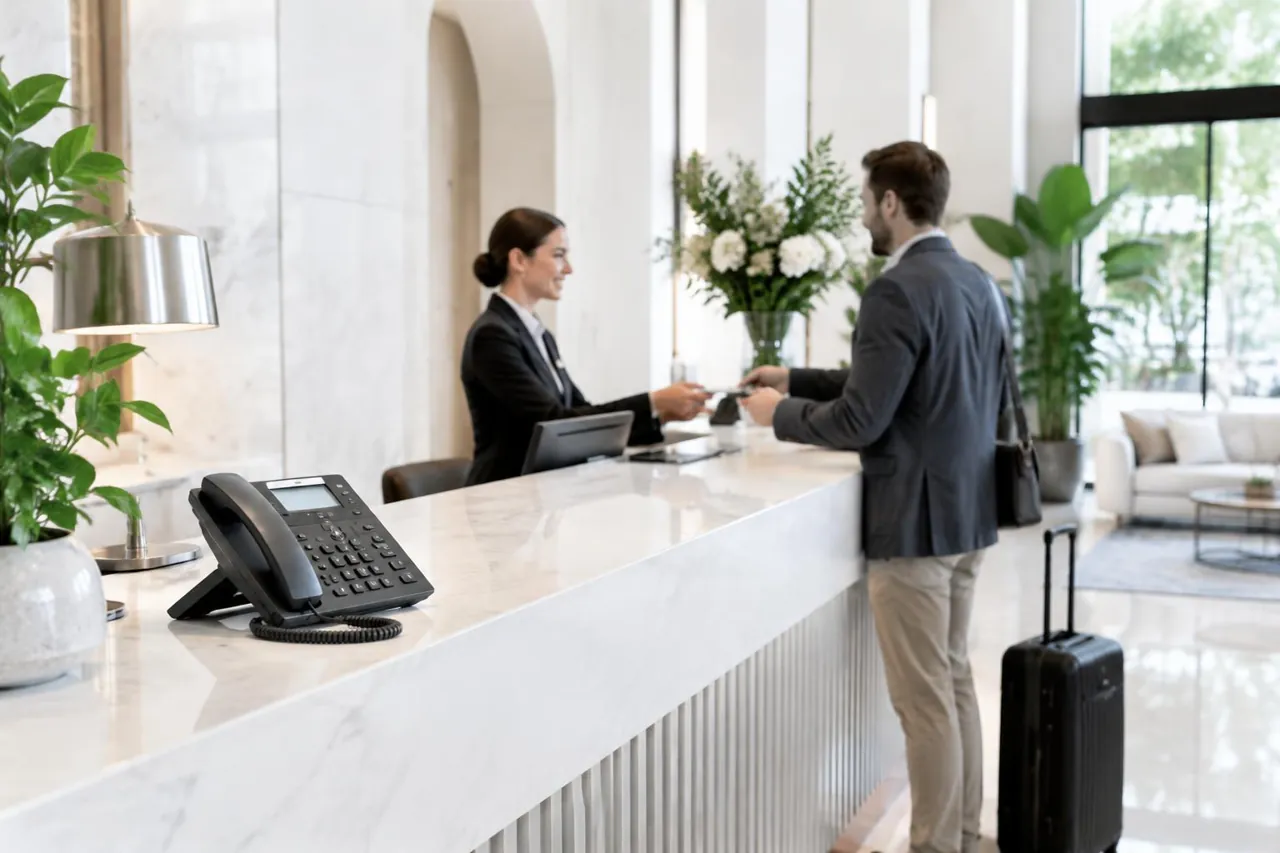
A guest calls at 11:30 pm, stuck in traffic and arriving after midnight. The agent asks for the name and booking date, records the expected arrival time and then, following hotel rules, gives entry instructions: a door code shared only after verification, a key pickup point, or the number of the person on duty. If the hotel does not use self check-in, the agent says it will pass the message to the person on duty and does so immediately. The guest ends the call knowing exactly what to do on arrival instead of hearing a phone ring in an empty lobby.
Data security and access codes
Door codes, room numbers and other guests' details are sensitive. The agent should not share them with anyone who has not passed agreed verification, such as a name and booking number matching the system. If the agent is not connected to the booking system, it is safer not to give codes by phone at all and to send them in advance with the booking confirmation. Make this decision before launch, not after the first incident.
Seasonality and occupancy
At small properties, call volume depends heavily on the season: before holidays and long weekends availability questions rise, while off-season calls are mostly from guests already staying. The knowledge base should reflect this — for example holiday packages or a restaurant closed off-season. Schedule a knowledge base review before each season, because an outdated breakfast-hours answer does more harm than no answer.
How we deploy this with Callivera
After you send the inquiry form, we agree with the hotel on the list of night questions, rules for urgent handoffs and the information the agent may share. We prepare a ready-made hotel agent on the Recepcjonista AI plan at 149 EUR per month with 300 minutes included and 0.39 EUR per additional minute. We test conversations in Polish and English on agreed scenarios and launch only after the hotel approves.
How to judge whether night service works
After a few weeks, check how many night booking requests were recorded and confirmed in the morning, how many cases were handed to the person on duty, and whether guests had to call again. Reviewing transcripts shows which questions are missing from the knowledge base.
Your action checklist
- List the most common night-time questions.
- Approve the knowledge base: parking, breakfast, check-in.
- Set an on-duty number for urgent and safety cases.
- Decide who confirms recorded bookings in the morning.
- Test conversations in your guests' languages.
- Decide whether, and after what verification, the agent shares access codes.
- Schedule a knowledge base review before each season.
Sources and scope
Editorial guidance, not legal or medical advice. Examples are illustrative; outcomes and integrations require verification.